
How to Make a Funeral Order of Service in Loughborough

Most people making a funeral order of service for the first time assume the hardest part will be deciding what to write. In practice, it's usually the opposite: the words come more easily than expected, while the actual process of putting it all together into a finished booklet is where families tend to get stuck. Formatting, page order, image placement, and print-readiness all raise questions that aren't obvious until you're in the middle of them.
If you haven't already, it's worth starting with our checklist on what to include in a funeral order of service since knowing your content in advance makes the actual making process far smoother. This post picks up from there and walks through how to make a funeral order of service from a blank page to a finished, printable booklet.
Step One: Settle the Content Before Touching Layout
It's tempting to open a design template and start filling it in right away, but content should come first. Trying to write and design at the same time usually means one of the two suffers: either the wording feels rushed, or the layout has to be reworked repeatedly as text changes.
A practical approach:
Draft all text separately: first names, readings, order of proceedings, and any tributes
Have a second family member read through it before moving to design
Confirm any hymn or reading permissions early, since these can take time to sort out
Decide roughly how much content you have, since this affects layout choices later
Once the content is settled, the design process becomes much more straightforward, because you're arranging finished material rather than guessing how much space you'll need.
Step Two: Choose a Structure That Matches Your Content
This is where the funeral order of service starts taking shape as a physical document. Most families choose between a simple single-fold card or a multi-page booklet, and the right choice usually comes down to how much content there is to include.
If you're also thinking about how the running order itself should flow, not just the physical layout, but the sequence of hymns, readings, and speakers, our guide on thefuneral service programmecovers that side of the process in more detail.
Layout considerations at this stage typically include:
Cover design and main photograph placement
Whether text will run in one or two columns
How much white space to leave around each section
Where to place secondary photographs, if any are included
A Note From Membrance
Design decisions like these are often where families feel least confident, simply because most people don't do this regularly.
This is one of the areas MembranceLLCspends the most time supporting families with, not by taking the decision away, but by offering layout options that already account for common content lengths and structures. If it's helpful to browse finished designs before starting your own, you're welcome to take a look through the Membrance homepage.
Step Three: Build the Actual Booklet

With content and structure decided, the next stage is assembling the booklet itself. If you're working from a template, this usually means placing your finalized text into the existing design and adjusting spacing where needed. If you're designing from scratch, this is where font choice, spacing, and page balance matter most.
A few practical points worth knowing:
Keep font sizes consistent across similar sections, so the booklet feels cohesive rather than pieced together
Leave slightly more margin than feels necessary; printed booklets often look tighter than they do on screen
Double-check that photographs are high enough resolution for print, not just for viewing on a phone or laptop
Number pages if the booklet runs to four pages or more, so guests can follow along easily
How much content actually fits comfortably on the page is a common sticking point here. Our guide on how many pages a funeral order of service should begoes into this in more detail, including how page count tends to scale with the number of readings and tributes included.
Common Mistakes When Making a Funeral Order of Service
A few issues come up again and again during the making process, regardless of how experienced the family is with design work:
Starting the design before content is finalized. This almost always leads to reformatting later, which adds unnecessary time pressure.
Using low-resolution images. A photo that looks fine on a phone screen can appear blurry once printed, especially if it's placed large on the cover.
Inconsistent formatting between sections. Mixing font sizes or styles without a clear reason can make a booklet feel less considered than it actually is.
Underestimating proofing time. Reading through a finished draft slowly, ideally on paper rather than screen, catches errors that are easy to miss otherwise.
Leaving the print step until the very end. Making the booklet is only half the process; knowing when to actually send it to print matters just as much.
Working From a Template Instead of Starting Blank
Not every family wants to design a booklet from nothing, and that's completely reasonable given everything else that needs attention during this time. Starting from an existing layout can remove a significant amount of decision-making without making the final result feel generic.
Our Order of Service Booklets collection includes several ready-made formats that cover the most common content lengths and styles, so you can adjust wording and images rather than building a layout from scratch.
For a design that works well across most types of services, the Classic Piano Order of Service Collection is a popular starting point; it has a balanced layout that suits both shorter single-fold formats and longer multi-page versions, depending on how much content you need to include.
Expert Perspective: Why the Making Process Deserves Time
It's easy to underestimate how much care goes into making a funeral order of service, mostly because the finished product looks simple. In reality, the simplicity is usually the result of several small decisions made carefully: how much space to leave, which details to prioritize, and how to balance text with imagery so the page doesn't feel crowded or empty.
Experience matters here in a practical way. Knowing roughly how much text fits comfortably per page, or how a photo will actually print rather than how it looks on screen, is something that becomes second nature only after doing it many times. It's also why timing the final steps correctly matters so much; rushing the print stage after spending real time on design can undo a lot of that care. Our guide onwhen to print a funeral order of servicecovers how to plan that final stage properly.
Bringing It All Together
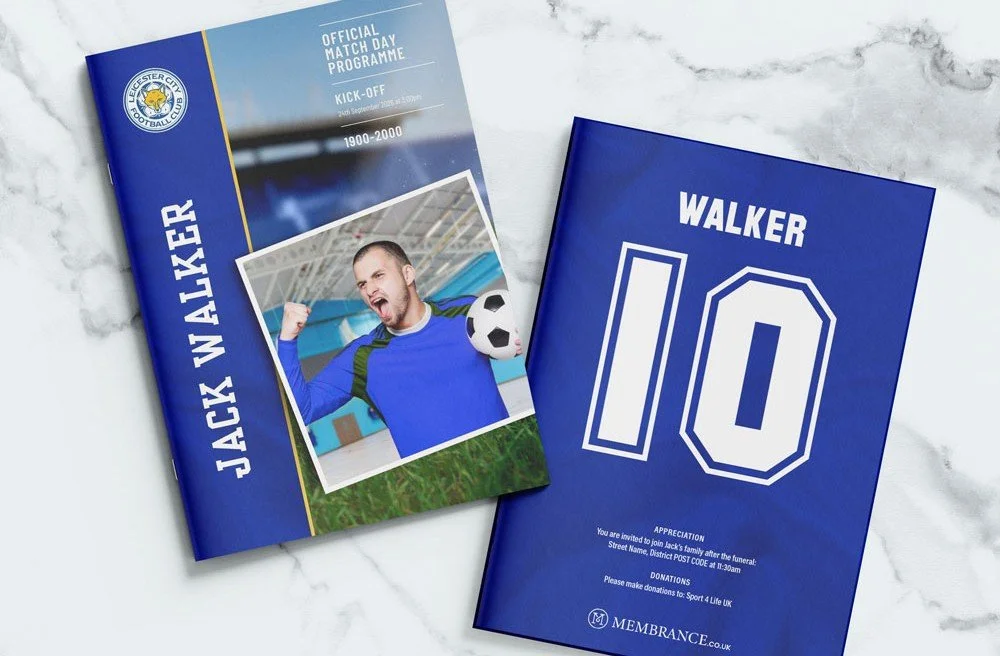
Making a funeral order of service comes down to a fairly logical sequence: settle the content, choose a structure that fits it, build the booklet carefully, and proof it thoroughly before printing. None of these steps are difficult on their own, but skipping the order they usually happen in is where most last-minute stress comes from.
If you'd like support putting one together, feel free to contact us; we're happy to talk through layout options or help finalize a design that feels right.
FAQs
1. Do I need design software to make a funeral order of service?
Not necessarily. Many families work from a ready-made template and simply adjust the text and images, which avoids the need for design experience.
2. How long does it usually take to make a funeral order of service?
This varies, but most families spend a few hours across several days finalizing content, then a shorter amount of time on layout, especially when working from a template.
3. Can I include more than one photograph in the booklet?
Yes. A single photo on the cover with additional images inside is common, particularly in multi-page formats.
4. What file format should I use if I'm sending this to a printer?
Most printers prefer a high-resolution PDF, though this can vary, so it's worth checking directly before finalizing your file.
5. What if I make a mistake after the booklet has already been printed?
It happens more often than people expect. Depending on the error and quantity printed, a short reprint run is sometimes possible, so it's worth asking rather than assuming it isn't an option.