
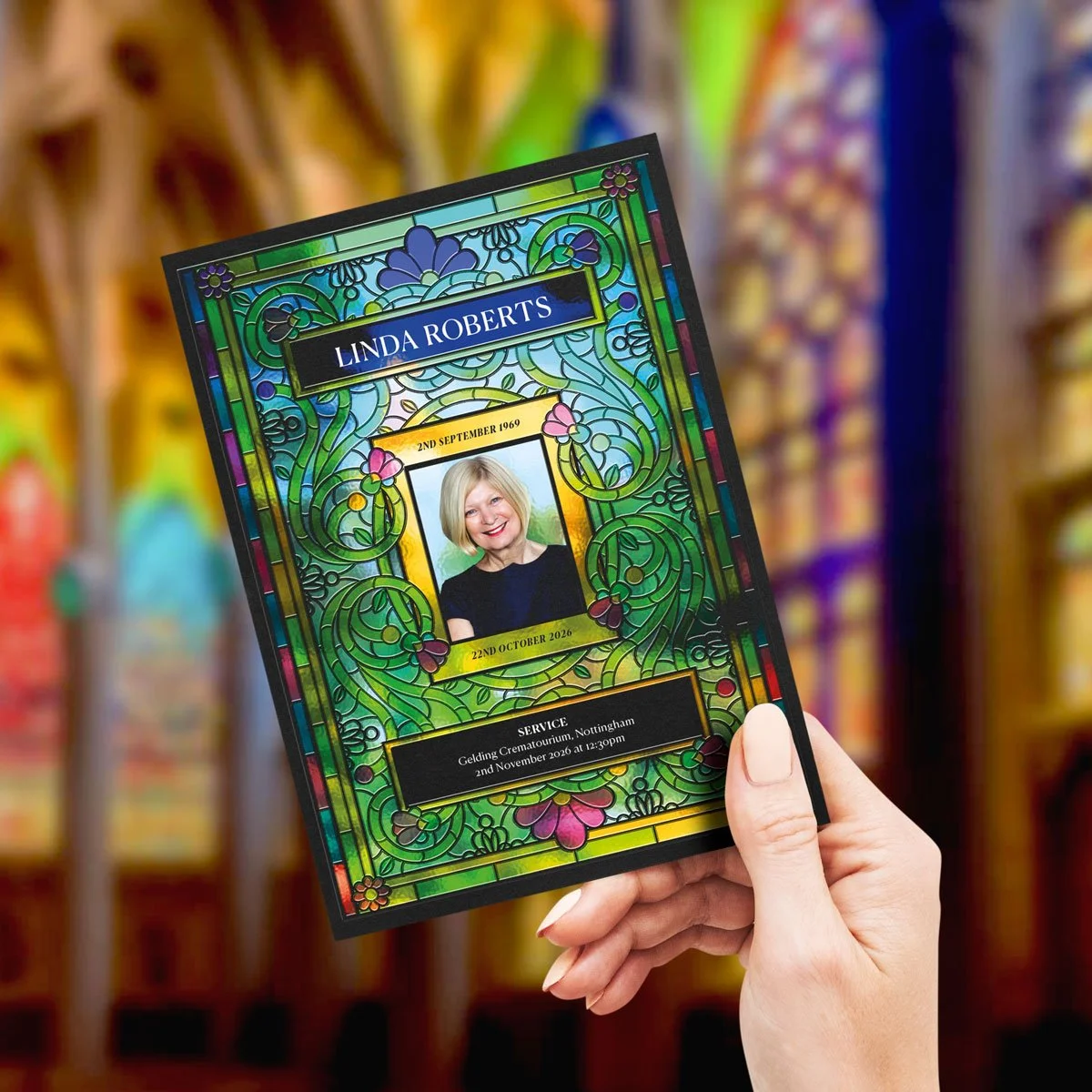
Order of service for cremation:
This can also be called:
format for funeral order of service, funeral order of service format, funeral notice sample, funeral order of service ideas, funeral order of service samples, funeral programme template, order of service funeral example, order of service funeral sample
Structure and Content of a Funeral Order of Service
In the UK, whether opting for burial or cremation, the structure of a funeral order of service remains consistent, providing a framework for honoring the deceased and guiding attendees through the service with dignity and respect.
Planning a funeral can be a daunting task, but one essential element that provides structure and guidance during the service is the funeral order of service. In the UK, this document serves as a roadmap for the funeral proceedings, outlining the sequence of events and providing attendees with valuable information.
Below, we’ll delve into the key components of a funeral order of service and explore some ideas for creating a meaningful tribute.
Membrance Order of Service Printing
Pick a template you love, select your quantity, and receive a link to edit your template. Add photos, update wording, and make it uniquely yours. Then we print and deliver in time for the service.
A typical outline for a funeral order of service in the UK:
Cover Page:
The cover page typically includes basic information such as the name of the deceased, their dates of birth and death, and sometimes a photograph. It serves as the introductory page and sets the tone for the rest of the program.
Welcome and Introduction:
This section is where the officiant or celebrant welcomes attendees to the funeral service and provides any necessary introductory remarks. It sets a respectful and inclusive tone for the proceedings.
Hymns and Music:
Hymns, songs, or instrumental pieces are included to provide moments of reflection and comfort during the service. Lyrics or titles may be provided to encourage congregational singing or silent reflection.
Readings:
Readings consist of selected passages from religious texts, poetry, or other literature that offer comfort, inspiration, or reflection. They are often chosen to reflect the beliefs and values of the deceased and their family.
Tributes and Eulogies:
Tributes and eulogies are personal remembrances and reflections on the life of the deceased. Family members, friends, or colleagues may share memories, stories, and anecdotes that celebrate the life and character of the departed individual.
Prayers and Reflections:
Prayers and reflections provide moments of spiritual contemplation and solace. They may include prayers of comfort, gratitude, or supplication, and are led by the officiant or designated individuals.
Committal:
The committal section marks the formal farewell to the deceased. It may include words of committal or farewell, symbolic actions such as placing flowers or ashes, and signifies the transition from the funeral service to the final resting place.
Closing Remarks:
Closing remarks offer final words of gratitude, farewell, and invitation. They may include expressions of thanks to attendees for their presence and support, as well as an invitation to join for refreshments or further remembrance.
Additional Information:
This section provides practical details about any post-funeral gatherings or receptions, as well as contact information for the family or organizing committee. It ensures that attendees are informed about any further arrangements or opportunities for remembrance.
Acknowledgments:
The acknowledgments section offers appreciation for the attendance and support of those present at the service. It may also express thanks to any individuals or organizations involved in the planning and execution of the funeral.
Orders of Service

Your complete personalised order of service.
From your first conversation with us to the finished printed order, everything is included in one simple price.
Included:
Personal consultation
Your choice of Membrance design style
Personalised design
4 or 8 pages
Up to 100 copies
Proofing and amendments
Professional printing
Delivery
You don't need to know how many copies you need.
That's something we'll work out with you as part of the process.
Start with the £199 package and we'll create your personalised order of service. Once your design is complete, you'll be able to confirm exactly how many copies you'd like printed.
If you need more than the 100 copies included in your package, you can simply add extra copies at that point:
150 copies +£14.99
200 copies +£19.99
250 copies +£24.99
300 copies +£29.99
You don't need to choose an additional quantity when you start.


Your complete personalised order of service.
From your first conversation with us to the finished printed order, everything is included in one simple price.
Included:
Personal consultation
Your choice of Membrance design style
Personalised design
4 or 8 pages
Up to 100 copies
Proofing and amendments
Professional printing
Delivery
You don't need to know how many copies you need.
That's something we'll work out with you as part of the process.
Start with the £199 package and we'll create your personalised order of service. Once your design is complete, you'll be able to confirm exactly how many copies you'd like printed.
If you need more than the 100 copies included in your package, you can simply add extra copies at that point:
150 copies +£14.99
200 copies +£19.99
250 copies +£24.99
300 copies +£29.99
You don't need to choose an additional quantity when you start.

Your complete personalised order of service.
From your first conversation with us to the finished printed order, everything is included in one simple price.
Included:
Personal consultation
Your choice of Membrance design style
Personalised design
4 or 8 pages
Up to 100 copies
Proofing and amendments
Professional printing
Delivery
You don't need to know how many copies you need.
That's something we'll work out with you as part of the process.
Start with the £199 package and we'll create your personalised order of service. Once your design is complete, you'll be able to confirm exactly how many copies you'd like printed.
If you need more than the 100 copies included in your package, you can simply add extra copies at that point:
150 copies +£14.99
200 copies +£19.99
250 copies +£24.99
300 copies +£29.99
You don't need to choose an additional quantity when you start.