
How to Create a Funeral Service Programme in Loughborough
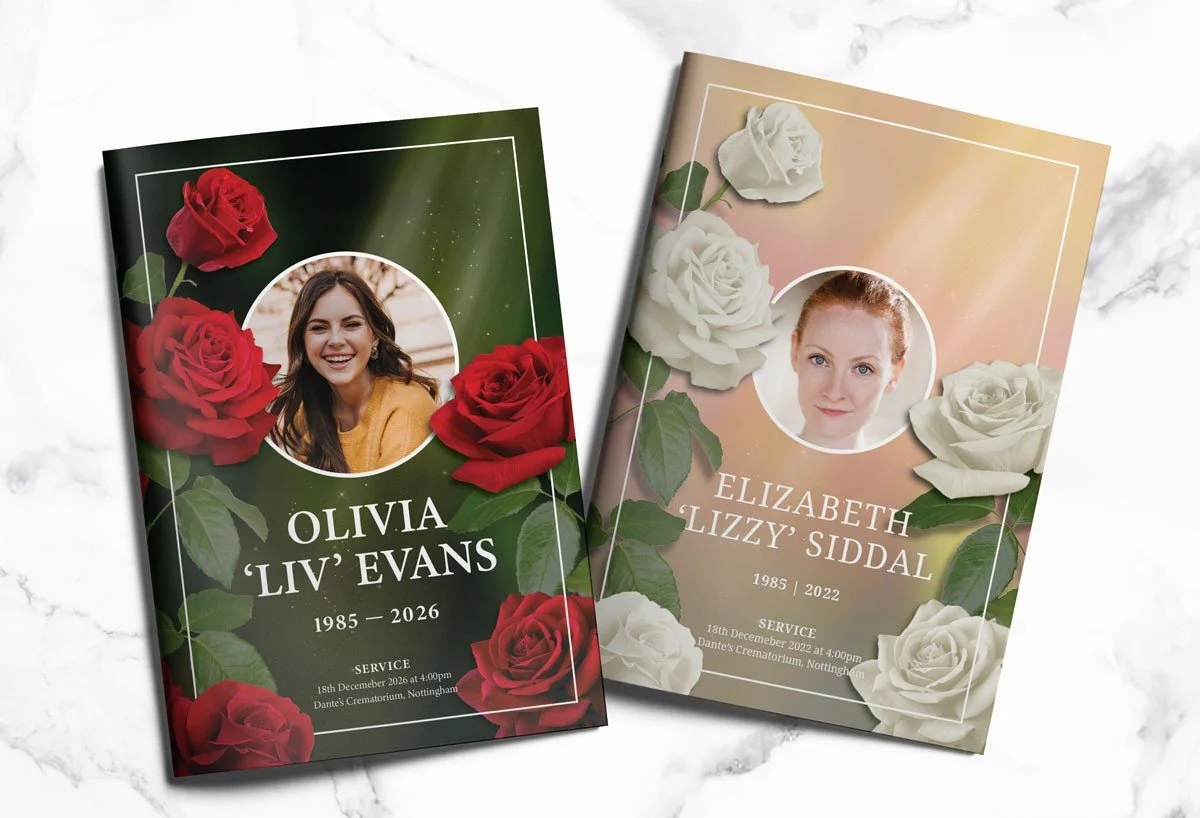
Most people don't realize how much a funeral service programme actually shapes the day until they sit down to write one. It's easy to assume it's just a list of names and hymn titles, but in practice, it's the document that quietly guides everyone in the room the celebrant, the family, the guests through what's about to happen.
Get the structure right, and the service flows naturally. Get it wrong, and even a well-planned day can feel disjointed.
If you've already read through our checklist on what to include in a funeral order of service,you'll know the basics of content. This post goes a step further and focuses specifically on structure: how to actually organize a funeral service programme so it reads clearly from the first page to the last.
What a Funeral Service Programme Actually Does
A funeral service programme is different from a general order of service in one key way: it's built around sequence. Rather than simply listing what's included, it lays out the running order of who speaks when, which hymn comes after which reading, and where pauses or transitions happen.
This matters more than people expect, especially for guests who aren't familiar with the format of the service. A well-structured programme means:
Guests know when to stand, sit, or join in with a hymn
Speakers know exactly when they're expected to come forward
The celebrant has a shared reference point with the family
There's no awkward hesitation between sections of the service
Without that structure, even a beautifully written tribute can lose its impact if nobody's sure when it's supposed to happen.
Building the Programme Step by Step
Most funeral service programmes follow a loose but recognizable order, and it helps to think of it in stages rather than trying to write it all at once.
Opening: This typically includes the entrance, an opening hymn or piece of music, and a welcome from the celebrant. If there's a specific piece of music the family wants played as guests are seated, it's worth noting that here too, even though it happens before the official start.
Main Body: This is where readings, hymns, prayers, and eulogies sit. The order here is flexible, but most families find it works best to alternate between spoken and musical elements rather than grouping all the readings and all the hymns. It keeps the pacing more natural.
Committal or Closing Words: For services that include a burial or cremation, this section marks the formal farewell. Even for services without a committal, most programmes include a closing reflection or final hymn here.
Closing: A thank-you from the family, details of the wake if there is one, and often a closing piece of music as guests leave.
If you'd like a more detailed breakdown of how to physically lay this out on the page spacing, page breaks, and formatting choices, our guide onhow to make a funeral order of servicecovers that side of things in more depth.
A Quick Note From Membrance
Structuring a programme like this from scratch can feel like a lot to manage on top of everything else. This is one of the areas where working with Membrance LLC tends to make the biggest difference, not because the format is complicated, but because it's easy to lose track of small sequencing details while you're also managing grief, family input, and a tight timeline. If it helps to see how a finished programme actually looks before you start writing your own, you're welcome to browse examples on the Membrance homepage.
Common Mistakes With Funeral Service Programmes
A few issues come up consistently, regardless of how the rest of the service is planned:
Listing readings out of order. It sounds obvious, but it's one of the most common last-minute corrections, especially when content is gathered from multiple family members separately.
Forgetting to account for transition time. A programme that reads well on paper can still feel rushed if there's no natural pause between an emotional reading and the next item.
Overloading the main body. Trying to include every request from every family member can make the middle section feel cluttered rather than considered. This often ties directly into page count; our guide on how many pages a funeral order of service should beexplains how the two are connected.
Not confirming timings with the venue. Some crematoriums and churches work to strict time slots, and a programme that doesn't account for that can run long without anyone intending it to.
Treating the programme as fixed too early. Content sometimes changes right up until the final proof, and that's normal; it's worth building in some flexibility rather than treating the first draft as final.
Personalizing the Structure Without Losing Clarity
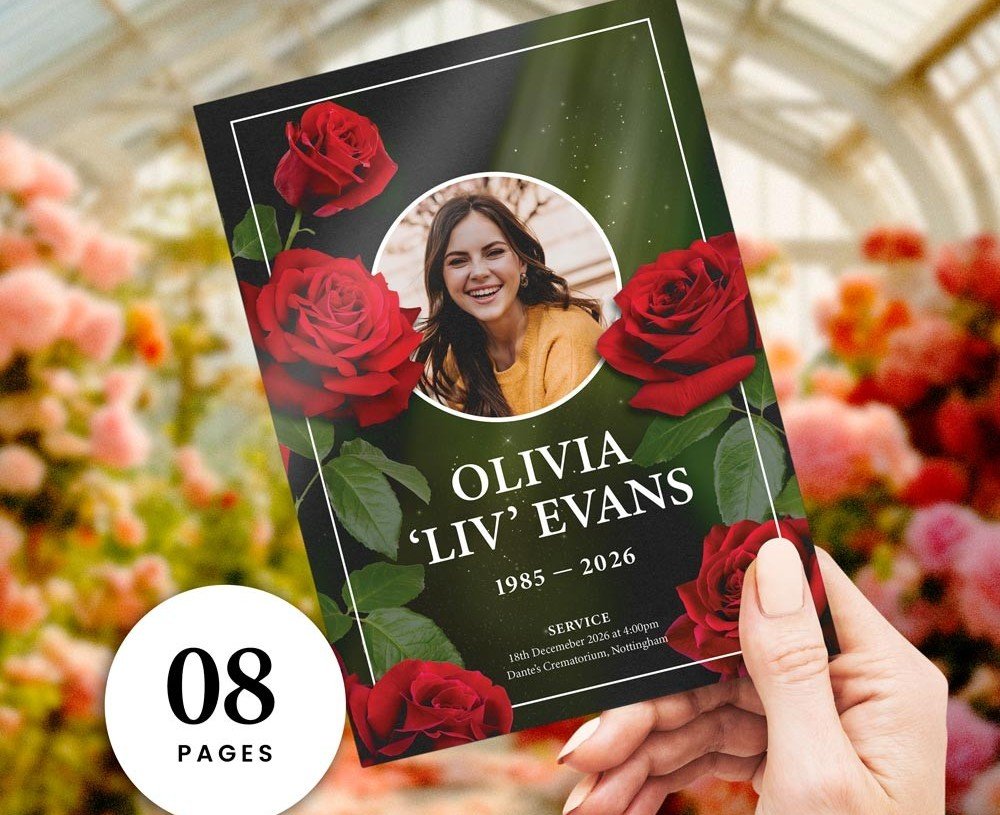
One thing worth saying clearly: structure doesn't mean rigid. A funeral service programme can absolutely reflect the person being remembered through the choice of music, the tone of the welcome, or even small design touches while still following a clear sequence guests can follow.
Some families like to include a short section between the main readings and the committal, such as a slideshow, a moment of shared silence, or a personal ritual like lighting a candle. These moments work best when they're clearly marked in the programme, even briefly, so guests know it's intentional rather than an unplanned pause.
If you're looking for a starting point rather than building the format from nothing, our Order of Service Booklets collection includes several programme layouts that already account for this kind of pacing, which can save a lot of back-and-forth during an already difficult week.
For a design that balances structure with a personal feel, the Classic Rose Order of Service Booklet is one families return to often; it has a clean, easy-to-follow layout that still leaves room for personal touches like photos or a short verse.
Expert Perspective: Why Sequence Matters as Much as Content
It's tempting to think of a funeral service programme as just a document, but in practice, it functions more like a script for the day. The words matter, but so does the order they appear in. A celebrant who has run hundreds of services can often sense when a programme's pacing feels off, even before the day itself, usually because a transition is missing or a section is placed awkwardly.
This is where experience genuinely helps. Knowing how long a typical reading takes to deliver, where guests usually need a breathing moment, and how to space out music so it doesn't feel repetitive isn't something most families do regularly. It's also exactly why getting the timing of the whole process right matters, including when the programme itself needs to go to print. Our guide onwhen to print a funeral order of servicecovers that timeline in more detail, so structure and scheduling aren't left until the last minute.
Bringing the Programme Together

A funeral service programme works best when it's treated as a sequence, not just a list. Opening, main body, committal, and closing each play a role in helping guests follow the day naturally, and small details like where a pause sits or how transitions are marked often matter more than people expect going in.
If you'd like help putting one together for a service you're planning, feel free tocontact us; we're happy to talk through the structure with you before anything goes to print.
FAQs
1. What's the difference between a funeral order of service and a funeral service programme?
They're often used interchangeably, but programme tends to emphasize the running order and sequence of events, while order of service can also refer to the printed booklet as a whole.
2. How long should a funeral service programme be?
Most run for 30 to 60 minutes when read aloud in full, though this varies depending on the number of readings, hymns, and speakers included.
3. Can I change the order of readings and hymns after the programme is drafted?
Yes, this is common. Most families make at least one adjustment before the final version is confirmed, and that's normal rather than a sign something was planned incorrectly.
4. Does every funeral service programme need a committal section?
No. Services without a burial or cremation on the same day often replace this with a closing reflection instead.
5. Who typically decides the final running order?
Usually the family, in consultation with the celebrant or officiant, who can flag any timing or venue restrictions that might affect the sequence.